
“One Way Back: A Memoir” by Christine Blasey Ford
“One Way Back: A Memoir” by Christine Blasey Ford
By Stacy Malone
Executive Director, Victim Rights Law Center
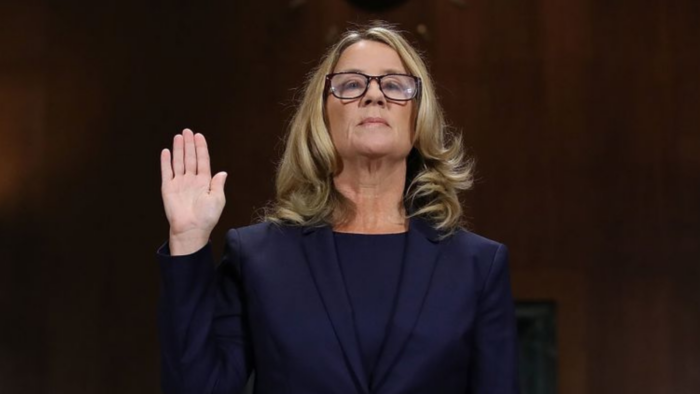
Dr. Christine Blasey Ford bared her soul when she stood before the country on September 27, 2018, to testify in front of the world about the details of a sexual assault. The sexual assault changed her life and so did taking the stand to tell the truth.
In her compelling memoir “One Way Back”, Ford takes the reader on the journey of her life before, during and after she testified that then Supreme Court Justice nominee Brett Kavanaugh had sexually assaulted her when she was fifteen. Ford describes growing up in the Washington, D.C. area and navigating her teen years as a sexual assault survivor. She gravitated to the west coast for college and graduate school, finding freedom in surfing. Her surf analogies are unexpected yet poignant, exposing complex layers of her healing journey.
Ford testified before the Senate Judiciary Committee because she believed it was her civic duty. She details in her memoir the months leading up to the testimony, including efforts to keep her identity confidential, the process of selecting the clothes she would wear to testify, and the questioning she endured by a former sex abuse prosecutor. Ford pulls the reader right into that hearing with her.
Readers will hope that once she’s done testifying, it will be over. She will return to normal life as a Stanford University professor, wife, and mother of two teen boys. But as a longtime attorney for sexual assault survivors, I knew that wasn’t the case. Ford continued to dodge death threats, lived in hotels for months at a time, and required 24/7 security for her family. Readers will learn what attorneys at VRLC have long known – a Supreme Court nominee can sexually assault someone and still secure a life-time appointment, but a sexual assault victim can’t even just go home.
Ford’s perspective of the attorney-client relationship was fascinating to hear. At Victim Rights Law Center, we practice trauma-informed lawyering which is understanding the impact trauma has on the individual and empowering the survivor by centering their experience throughout our representation. Private legal practice doesn’t often function that way. Ford had excellent attorneys representing her. But, as sexual violence lawyers, we can learn from her critiques of the attorney-client relationship and continue to hold ourselves to a high standard in our commitment to help survivors.
I highly recommend listening to the audio version of Ford’s memoir. Hearing a survivor put voice to her own experiences feels like you’re sitting down with a friend having a cup of coffee as you listen to her riveting journey that you, at times, wish wasn’t real. If you are deeply interested in this topic, listen to the “Because of Anita” podcast to hear an incredible exchange between Ford and Professor Anita Hill on their unique shared experience.
I believe Ford. Not for a moment did I think she came forward for any reason but to complete her civic duty. Speaking out against a perpetrator (especially on a national platform) is scary. She had nothing to gain by testifying. Ford is an American hero.
Stacy Malone is the Executive Director of Victim Rights Law Center. Her essay, “The Power of Survivor-Defined Justice” is in the anthology Believe Me: How Trusting Women Can Change the World, released in January 2020.
Follow Us
